Lining5 min read
Van flooring that lasts
Insulation, ply and a wearing surface that survives wet boots. How to build a floor that stays quiet and dry.
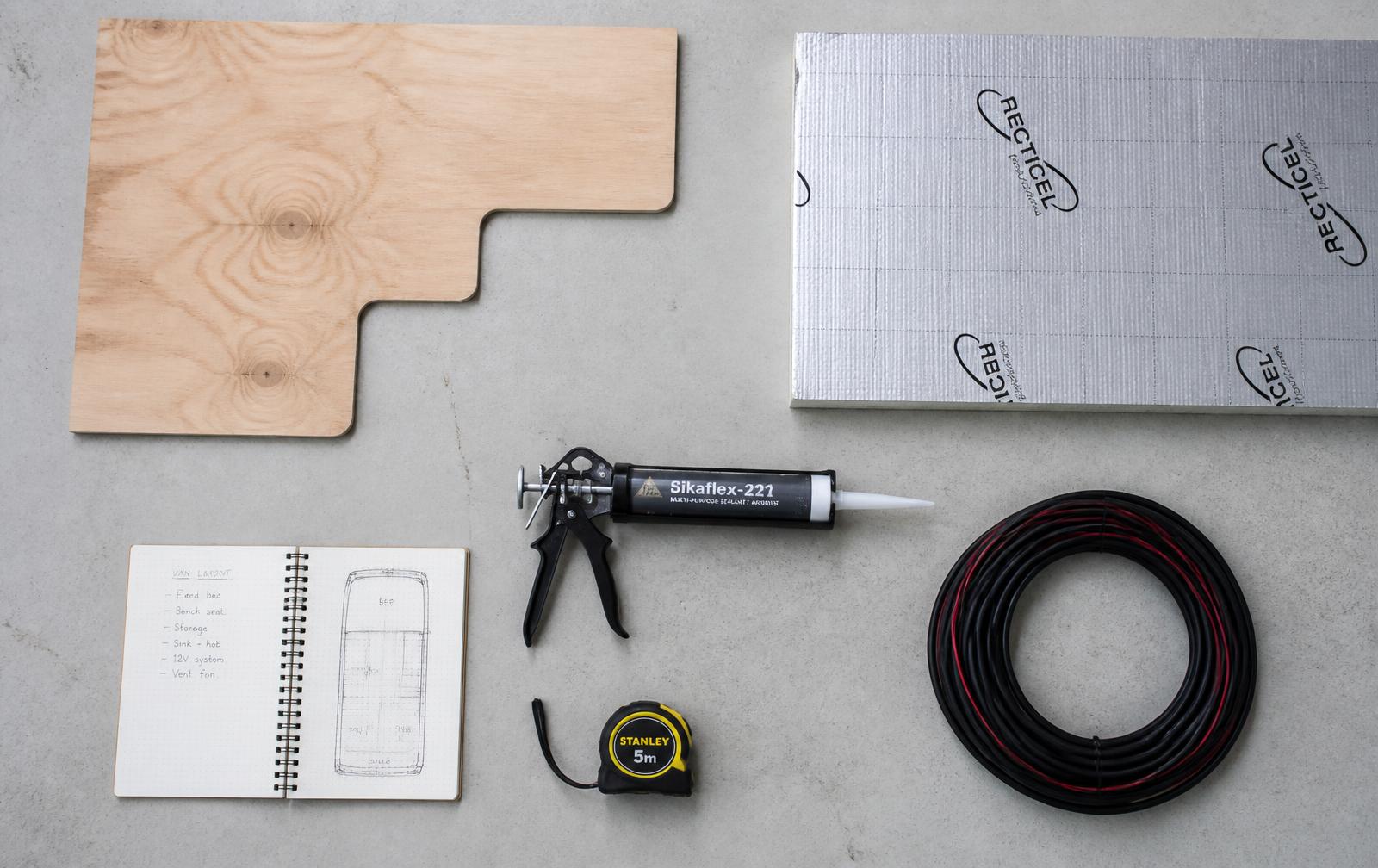
The floor carries everything
Furniture, tanks, people and muddy dogs all load the floor. Build it flat, sealed and strong enough for the fixings you will add later. A soft or uneven floor shows up in every cupboard door that will not shut.
Build-up that works
- Clean and treat the metal.
- Insulate without leaving soggy voids.
- Lay a ply subfloor screwed to structure, not floating on hope.
- Seal edges and screw heads against moisture.
- Add the wearing surface: vinyl, laminate or a sealed ply finish you can actually clean.
Keep an eye on finished height. A tall floor steals headroom and can foul door seals and seat bases.
Wet zones
Door apertures, under the kitchen and around a shower tray need extra sealing. Water finds the lowest path. Give it a path to the outside, not into the insulation.
Weight
Floor packs add up quietly. Log the ply and finish in the weight tracker. If you are payload-tight, thinner good ply beats thick cheap board every time.
A quiet, flat floor makes the whole van feel finished. A drumming one never leaves your head.
Figures in this guide are planning estimates. Confirm weights and prices against real products, and have gas and electrical habitation work signed off by a qualified person.
Turn this into a build plan
Twelve questions about how you will actually use the van. Out comes a schedule, cost ledger and payload budget sized to your van.
Start the plannerBrowse Flooring kit
Budget, mid and premium options with weights and honest price ranges.
Open the component library ›