Lining5 min read
Cladding and vapour control
How to close the walls without trapping damp. Vapour barriers, batons and cladding that still lets you reach a cable later.
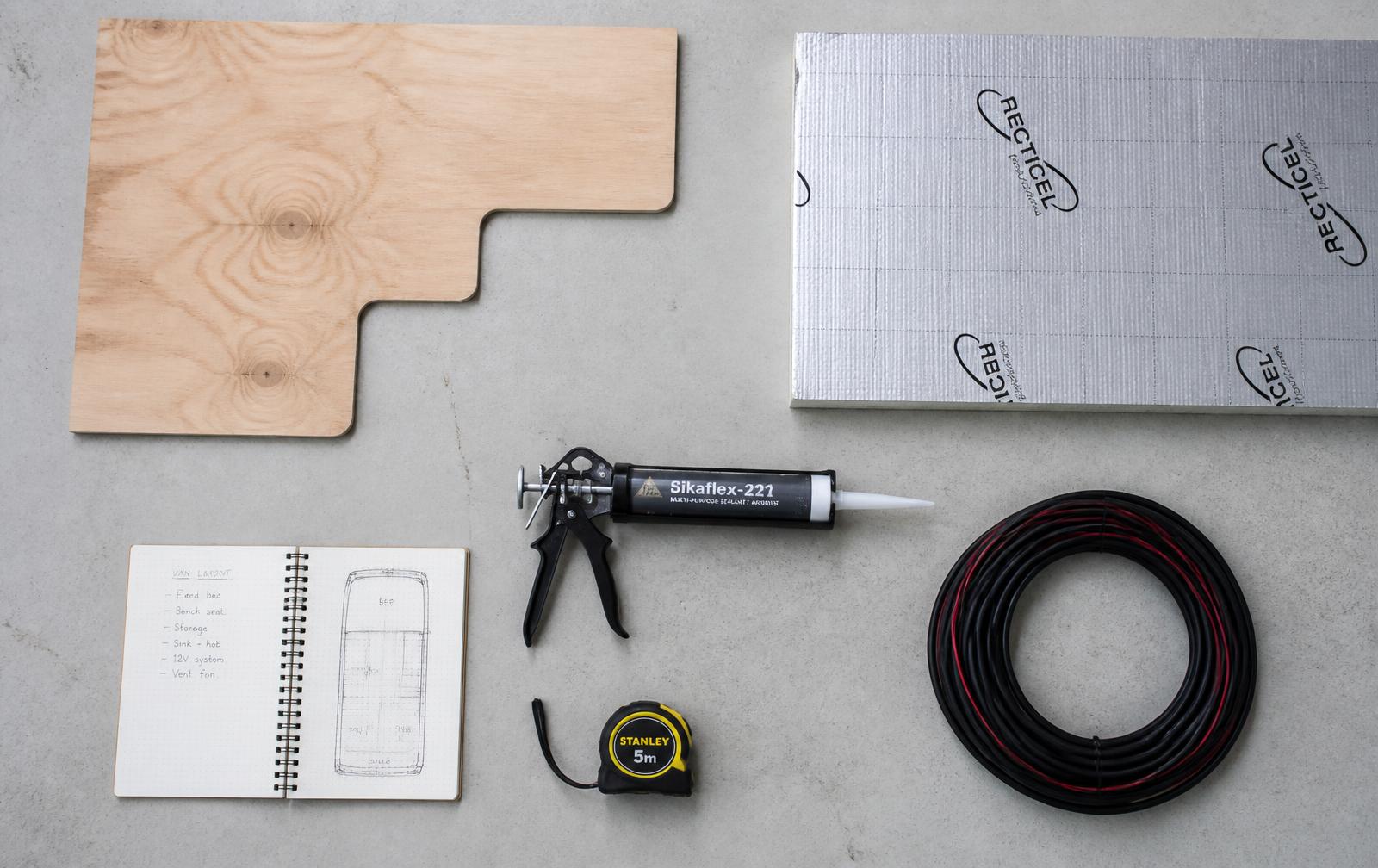
Close the walls once, properly
Cladding is the point of no easy return. Before the first sheet goes up, confirm cable routes, pipe runs, window trims and where access panels will live. Tape a map on the windscreen if you need to.
Vapour control
Insulation without a vapour control layer is how moisture finds cold steel. Fit the membrane carefully. Tape seams, glands and penetrations. A half-hearted job defeats the product.
Leave the roof vent working. A sealed, insulated van with no airflow will sweat.
Batons and panels
Batons give you something honest to screw into and a small service gap. Keep them light. Overbuilding the frame eats payload and volume.
Cladding choices are taste and weight. Thin ply, tongue-and-groove and composite panels all work if they are fixed to structure and finished against condensation. Soften edges that people brush past every day.
Access you will need
Pumps, fuse boxes, tank senders and heater units all fail eventually. Design removable panels now. Future you, parked in the rain with a torch, will not thank a fully glued wall.
If you cannot explain how you will reach a joint later, do not bury it yet.
Figures in this guide are planning estimates. Confirm weights and prices against real products, and have gas and electrical habitation work signed off by a qualified person.
Turn this into a build plan
Twelve questions about how you will actually use the van. Out comes a schedule, cost ledger and payload budget sized to your van.
Start the plannerBrowse Cladding kit
Budget, mid and premium options with weights and honest price ranges.
Open the component library ›